
The Role of Internet of Things Instruments in the Healthcare Sector
2026-08-06
In recent years, the concept of the Internet of Things (IoT) has revolutionized various industries, and healthcare is no exception. IoT instruments refer to smart devices that connect to the internet, enabling data collection and communication between devices. In the context of healthcare, these instruments play a crucial role in improving patient care and operational efficiency.
One of the primar
In recent years, the concept of the Internet of Things (IoT) has revolutionized various industries, and healthcare is no exception. IoT instruments refer to smart devices that connect to the internet, enabling data collection and communication between devices. In the context of healthcare, these instruments play a crucial role in improving patient care and operational efficiency.
One of the primary applications of IoT instruments in healthcare is remote patient monitoring. Devices such as wearable health trackers and smart medical sensors can continuously monitor patients’ vital signs, such as heart rate, blood pressure, and glucose levels. This real-time data allows healthcare professionals to track patients' health conditions remotely, facilitating timely interventions when necessary. For instance, a patient with chronic illnesses can be monitored from home, reducing the need for frequent hospital visits and minimizing healthcare costs.
Moreover, IoT instruments can enhance workflow and operational efficiency within healthcare facilities. Smart medical devices can communicate with each other and healthcare systems, eliminating the need for manual data entry and reducing the likelihood of human error. For example, connected infusion pumps can automatically adjust medication dosages based on a patient’s real-time data, ensuring accurate delivery of treatment. This not only improves patient safety but also allows healthcare providers to allocate their resources more effectively.
The integration of IoT instruments also supports data analytics and predictive modeling. By collecting vast amounts of data from various devices, healthcare organizations can analyze trends and patterns, leading to better decision-making. For instance, predictive analytics can help identify potential outbreaks of diseases by analyzing data from connected devices across various regions. This proactive approach allows healthcare systems to respond more effectively to public health challenges.
Furthermore, IoT instruments can enhance patient engagement and education. Many devices come with user-friendly interfaces that allow patients to access their health data easily. This transparency encourages patients to take an active role in managing their health, leading to better adherence to treatment plans and improved health outcomes.
However, the adoption of IoT instruments in healthcare also presents challenges, particularly concerning data privacy and security. With the increasing amount of sensitive health data being transmitted over the internet, ensuring the protection of this information is paramount. Healthcare organizations must implement robust cybersecurity measures to safeguard patient data and comply with regulations.
In summary, Internet of Things instruments are transforming the healthcare landscape by improving patient monitoring, enhancing operational efficiency, supporting data analytics, and fostering patient engagement. As technology continues to evolve, the potential for IoT in healthcare will likely expand, leading to even greater innovations that can benefit patients and providers alike. Understanding these advancements is essential for stakeholders in the healthcare industry as they navigate the future of medical technology.
Internet of Things Instrument
RELATED NEWS
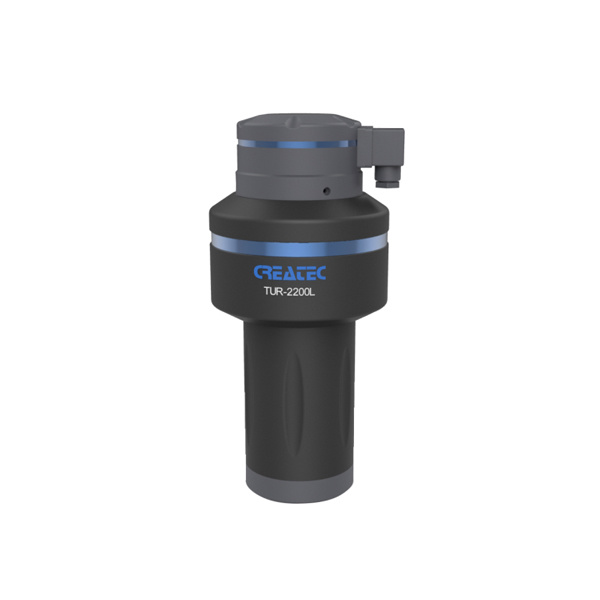
The Future of Water Treatment: Harnessing the Power of Online Turbidity Sensors
2026-10-08
The Future of Water Treatment: Harnessing the Power of Online Turbidity Sensors
Table of Contents
Introduction: The Importance of Water Quality Monitoring
Understanding Turbidity: What It Is and Why It Matters
The Role of Online Turbidity Sensors in Modern Water Treatment
Technology Behind Online Turbidity Sensors: How They Work
Benefits of Using Online Turbidity Sensors in Water Treatment
Applic

Understanding High Turbidity Data Acquisition Terminals in Water Quality Analysis
2026-10-01
---
In the realm of water quality analysis, particularly in the pharmaceutical and healthcare industries, High Turbidity Data Acquisition Terminals are essential tools. These specialized devices are designed to measure and record turbidity levels in water samples, which is a crucial parameter in determining the clarity and quality of water. Turbidity, caused by suspended particles, microorganisms,

Innovative Solutions for Water Quality Control: Digital Multi-parameter Integration Sensors
2026-09-24
Innovative Solutions for Water Quality Control: Digital Multi-parameter Integration Sensors
Table of Contents
Introduction to Water Quality Control
The Importance of Water Quality Monitoring
Traditional Methods of Water Quality Analysis
The Rise of Digital Multi-parameter Sensors
Key Features of Digital Multi-parameter Integration Sensors
Applications of Digital Multi-para

CREATEC will be there where there is water
Focus on the independent research and development of online water quality analysis instruments and water environmental protection analysis instruments
ABOUT US
Hebei Create Instrumentation Technologies Co., Ltd. is a national high-tech technology enterprise which is specialized in the water quality online analysis instruments.The founder Hao shuanju was first awarded the national “Automatic Pure Water Monitor” patent in 1988.And entered into the field of water quality online analysis and research.
CONTACT US
Factory :NO.2 Building ,No.368 North Xinshi Road, Shijiazhuang 050091,Hebei Province,China.
Office Address: Block 23, Keying·Zhichuang Valley, Huai'an West Road, Luquan District, Shijiazhuang City
Tel: 86-311-83831058 / 67368592
E-Mail:meter@createc.cn
QUALITY OF SERVICE

Follow us
Learn more about online water quality analysis instruments