
Understanding the Importance of Single Stage RO Controllers in Water Quality Analysis
2026-10-15
In the medical and health sector, the quality of water used in analysis and laboratory processes is paramount. Single Stage RO (Reverse Osmosis) Controllers play a crucial role in maintaining this quality by ensuring that water purification systems operate efficiently and effectively. These controllers are designed to manage the reverse osmosis process, which is essential for producing high-qualit
In the medical and health sector, the quality of water used in analysis and laboratory processes is paramount. Single Stage RO (Reverse Osmosis) Controllers play a crucial role in maintaining this quality by ensuring that water purification systems operate efficiently and effectively. These controllers are designed to manage the reverse osmosis process, which is essential for producing high-quality, contaminant-free water.
A Single Stage RO Controller is responsible for regulating the water purification process by monitoring various parameters such as pressure, flow rate, and water quality. It typically integrates sensors and automated mechanisms that enable real-time adjustments to optimize the RO system's performance. By keeping the system running at peak efficiency, these controllers help to minimize water waste, reduce energy consumption, and prolong the lifespan of the RO membranes.
One of the primary benefits of using a Single Stage RO Controller is its ability to enhance the reliability of water quality. In environments where water purity is critical, such as pharmaceutical laboratories, any lapse in water quality can lead to compromised results or even safety issues. The controller continuously monitors the output water quality, ensuring that it meets the stringent standards required for medical applications.
Moreover, these controllers simplify the operation of RO systems. They often feature user-friendly interfaces that allow operators to easily monitor system performance and make necessary adjustments. This ease of use is particularly beneficial in busy laboratory environments, where time and precision are of the essence. With automated controls, operators can focus on other important tasks while the system manages water purification efficiently.
In addition, Single Stage RO Controllers can provide valuable data on system performance metrics. This data is essential for troubleshooting and maintenance, allowing laboratory personnel to identify potential issues before they become major problems. Regular monitoring of performance metrics can also aid in compliance with regulatory standards, ensuring that laboratories maintain high operational standards.
In conclusion, the implementation of Single Stage RO Controllers in water quality analysis within the pharmaceutical and healthcare sectors is essential for ensuring the purity and reliability of water used in critical applications. By optimizing the reverse osmosis process, these controllers not only improve operational efficiency but also guarantee that the highest standards of water quality are consistently met. Their role in enhancing system reliability and simplifying operations makes them an invaluable asset in any laboratory focused on water quality analysis. Adopting such advanced technology ultimately leads to better outcomes and enhanced safety in medical applications.
Single Stage RO Controller
RELATED NEWS

2026-11-10
---
Sanitary Digital Paddle Wheel Flow Sensors are cutting-edge devices that play a critical role in monitoring and measuring the flow of liquids in various applications, particularly within the pharmaceutical and healthcare sectors. These sensors are designed to provide high precision and reliability, ensuring that water quality analysis meets industry standards.
One of the primary advantages of

Improving Performance: Maintenance Tips for Ultrasonic Open Channel Flow Meters
2026-10-22
Improving Performance: Maintenance Tips for Ultrasonic Open Channel Flow Meters
Table of Contents
1. Introduction to Ultrasonic Open Channel Flow Meters
2. Understanding Ultrasonic Flow Meters
3. Importance of Regular Maintenance
4. Essential Maintenance Tips
4.1 Cleaning Procedures for Sensors
4.2 Calibration Guidelines for Accuracy
4.
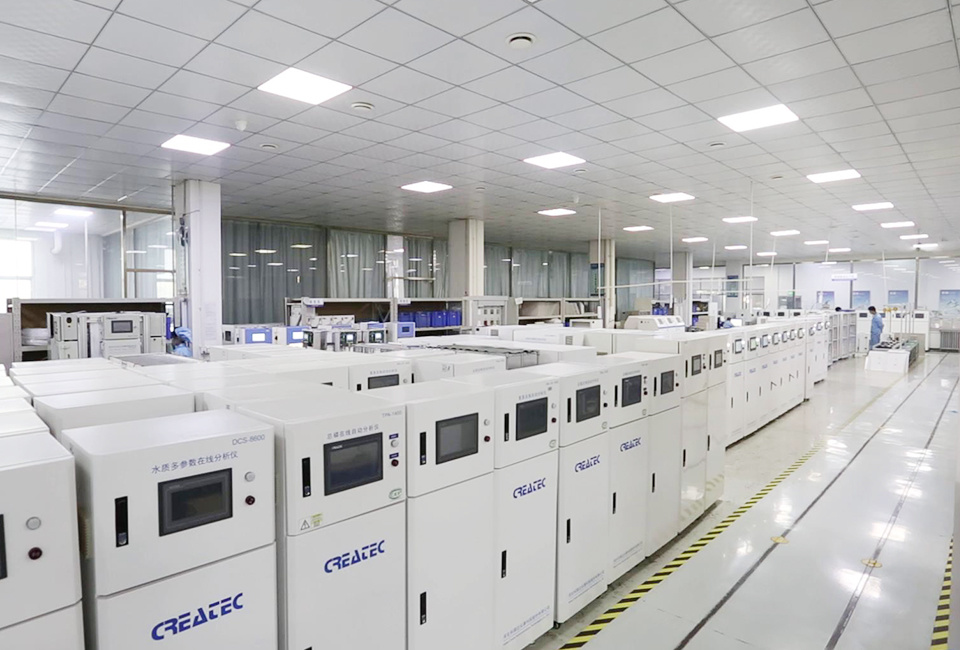
Understanding the Importance of Single Stage RO Controllers in Water Quality Analysis
2026-10-15
In the medical and health sector, the quality of water used in analysis and laboratory processes is paramount. Single Stage RO (Reverse Osmosis) Controllers play a crucial role in maintaining this quality by ensuring that water purification systems operate efficiently and effectively. These controllers are designed to manage the reverse osmosis process, which is essential for producing high-qualit

CREATEC will be there where there is water
Focus on the independent research and development of online water quality analysis instruments and water environmental protection analysis instruments
ABOUT US
Hebei Create Instrumentation Technologies Co., Ltd. is a national high-tech technology enterprise which is specialized in the water quality online analysis instruments.The founder Hao shuanju was first awarded the national “Automatic Pure Water Monitor” patent in 1988.And entered into the field of water quality online analysis and research.
CONTACT US
Factory :NO.2 Building ,No.368 North Xinshi Road, Shijiazhuang 050091,Hebei Province,China.
Office Address: Block 23, Keying·Zhichuang Valley, Huai'an West Road, Luquan District, Shijiazhuang City
Tel: 86-311-83831058 / 67368592
E-Mail:meter@createc.cn
QUALITY OF SERVICE

Follow us
Learn more about online water quality analysis instruments