
The Transformative Role of Internet of Things Instruments in Healthcare
2025-04-03
The Internet of Things (IoT) instruments are rapidly transforming various industries, and healthcare is no exception. In the medical field, IoT technology comprises interconnected devices that gather, transmit, and analyze health-related data, promoting a proactive approach to patient care and operational efficiency. This article explores the significance of IoT instruments in healthcare, particul
The Internet of Things (IoT) instruments are rapidly transforming various industries, and healthcare is no exception. In the medical field, IoT technology comprises interconnected devices that gather, transmit, and analyze health-related data, promoting a proactive approach to patient care and operational efficiency. This article explores the significance of IoT instruments in healthcare, particularly within the realm of medical devices.
One of the key advantages of IoT instruments in healthcare is their ability to facilitate real-time monitoring of patient health. Wearable devices, such as smartwatches and fitness trackers, enable individuals to track vital signs, such as heart rate, blood pressure, and physical activity levels. This data can be shared with healthcare providers, allowing for timely interventions in case of abnormalities. Such continuous monitoring is particularly beneficial for patients with chronic illnesses, as it helps manage their conditions more effectively.
Moreover, IoT instruments enhance the overall patient experience by enabling personalized care. With advanced data analytics, healthcare professionals can tailor treatment plans based on individual patient data gathered from various sources, including smart medical devices. This level of customization not only improves patient outcomes but also fosters a deeper patient-provider relationship, as patients feel more engaged in their healthcare journey.
In addition to patient monitoring and personalized care, IoT instruments play a crucial role in streamlining healthcare operations. The integration of IoT technology in medical devices can help manage inventory, track equipment usage, and monitor the condition of medical supplies. For instance, smart infusion pumps can automatically alert staff when medications are low or when equipment requires maintenance. This proactive approach reduces operational costs, minimizes waste, and ensures that healthcare facilities run more efficiently.
Furthermore, the data collected through IoT instruments can contribute to valuable insights for research and development. Aggregated health data can be analyzed to identify trends, leading to advancements in treatment methodologies and the development of new medical devices. This continuous feedback loop between data collection and innovation ultimately benefits both patients and healthcare providers.
However, with the integration of IoT instruments comes the need for robust data security measures. As healthcare data is highly sensitive, it is imperative to implement stringent cybersecurity protocols to safeguard patient information from potential breaches. Maintaining patient privacy and ensuring data integrity must be a priority for healthcare organizations adopting IoT technology.
In conclusion, Internet of Things instruments are at the forefront of a healthcare revolution, enhancing patient monitoring, personalizing care, and improving operational efficiency. As the medical devices industry continues to evolve with the integration of IoT technology, the potential for better patient outcomes and streamlined healthcare processes is immense. Embracing these innovations will not only reshape patient care but also pave the way for a more connected and responsive healthcare ecosystem.
Internet of Things Instrument
RELATED NEWS

2026-11-10
---
Sanitary Digital Paddle Wheel Flow Sensors are cutting-edge devices that play a critical role in monitoring and measuring the flow of liquids in various applications, particularly within the pharmaceutical and healthcare sectors. These sensors are designed to provide high precision and reliability, ensuring that water quality analysis meets industry standards.
One of the primary advantages of

Improving Performance: Maintenance Tips for Ultrasonic Open Channel Flow Meters
2026-10-22
Improving Performance: Maintenance Tips for Ultrasonic Open Channel Flow Meters
Table of Contents
1. Introduction to Ultrasonic Open Channel Flow Meters
2. Understanding Ultrasonic Flow Meters
3. Importance of Regular Maintenance
4. Essential Maintenance Tips
4.1 Cleaning Procedures for Sensors
4.2 Calibration Guidelines for Accuracy
4.
Understanding the Importance of Single Stage RO Controllers in Water Quality Analysis
2026-10-15
In the medical and health sector, the quality of water used in analysis and laboratory processes is paramount. Single Stage RO (Reverse Osmosis) Controllers play a crucial role in maintaining this quality by ensuring that water purification systems operate efficiently and effectively. These controllers are designed to manage the reverse osmosis process, which is essential for producing high-qualit

CREATEC will be there where there is water
Focus on the independent research and development of online water quality analysis instruments and water environmental protection analysis instruments
ABOUT US
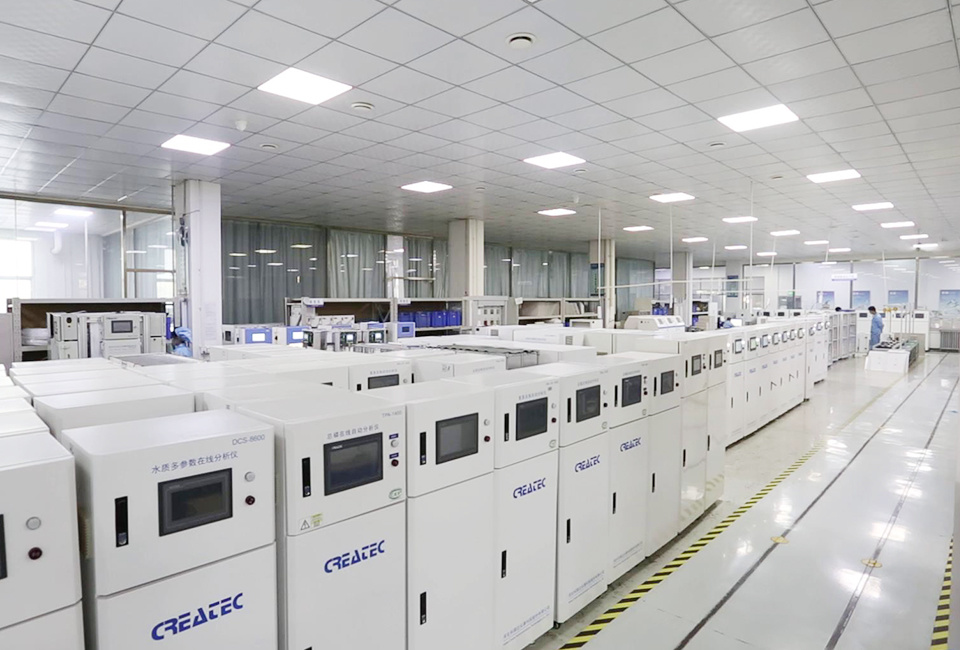
Hebei Create Instrumentation Technologies Co., Ltd. is a national high-tech technology enterprise which is specialized in the water quality online analysis instruments.The founder Hao shuanju was first awarded the national “Automatic Pure Water Monitor” patent in 1988.And entered into the field of water quality online analysis and research.
CONTACT US
Factory :NO.2 Building ,No.368 North Xinshi Road, Shijiazhuang 050091,Hebei Province,China.
Office Address: Block 23, Keying·Zhichuang Valley, Huai'an West Road, Luquan District, Shijiazhuang City
Tel: 86-311-83831058 / 67368592
E-Mail:meter@createc.cn
QUALITY OF SERVICE

Follow us
Learn more about online water quality analysis instruments