
Digital Laser Technology: Pioneering Water Quality Assurance
2025-09-11
Digital Laser Technology: Pioneering Water Quality Assurance
Table of Contents
1. Introduction to Digital Laser Technology in Water Quality Assurance
2. What is Digital Laser Technology?
3. The Importance of Water Quality Assurance
4. How Digital Laser Technology Works in Water Quality Analysis
5. Applications of Digital Laser Technology in Water Quality Testing
6. Advanta
Digital Laser Technology: Pioneering Water Quality Assurance
Table of Contents
- 1. Introduction to Digital Laser Technology in Water Quality Assurance
- 2. What is Digital Laser Technology?
- 3. The Importance of Water Quality Assurance
- 4. How Digital Laser Technology Works in Water Quality Analysis
- 5. Applications of Digital Laser Technology in Water Quality Testing
- 6. Advantages of Using Digital Laser Technology for Water Analysis
- 7. Challenges and Limitations of Digital Laser Technology
- 8. Future Trends in Digital Laser Technology for Water Quality Assurance
- 9. Conclusion
- 10. Frequently Asked Questions
1. Introduction to Digital Laser Technology in Water Quality Assurance
The demand for accurate and reliable water quality testing is more critical than ever. As global concerns regarding water safety and pollution intensify, **digital laser technology** emerges as a groundbreaking solution in the field of water quality assurance. This cutting-edge technology not only enhances the accuracy of water analysis but also improves the efficiency of the testing process. In this article, we will explore how digital laser technology is pioneering water quality assurance and the significant impact it has on ensuring safe drinking water and protecting our ecosystem.
2. What is Digital Laser Technology?
Digital laser technology utilizes advanced laser systems to measure the physical and chemical properties of water. By emitting highly focused beams of light, these systems can detect various contaminants and parameters such as turbidity, chemical composition, and even biological activity in real-time. Unlike traditional methods, which may require extensive sample preparation and longer response times, digital laser technology streamlines the testing process, providing rapid and reliable results.
2.1 The Science Behind Laser Technology
At its core, digital laser technology relies on the principles of light interaction with matter. When a laser beam passes through a water sample, it interacts with the molecules present. Depending on the substances within the water, the light may be absorbed, scattered, or fluoresced. Analyzing these interactions allows scientists to deduce vital information about the water's quality.
3. The Importance of Water Quality Assurance
Water quality assurance is crucial for public health, environmental protection, and sustainable development. Contaminated water can lead to severe health issues, including gastrointestinal diseases, neurological disorders, and even cancer. Ensuring the safety of our water sources is essential not only for human consumption but also for agriculture, industry, and aquatic ecosystems.
3.1 Public Health Risks Associated with Poor Water Quality
The World Health Organization (WHO) estimates that about 2 billion people globally do not have access to safely managed drinking water. Contaminants such as heavy metals, pathogens, and chemical pollutants pose significant health risks. By implementing effective water quality assurance processes, we can mitigate these risks and protect vulnerable populations.
4. How Digital Laser Technology Works in Water Quality Analysis
Digital laser systems utilize various techniques to analyze water quality. The primary methods include:
4.1 Laser Induced Breakdown Spectroscopy (LIBS)
LIBS is a technique that involves focusing a laser pulse on a water sample, causing it to vaporize and form a plasma. This plasma emits light that can be analyzed to determine the elemental composition of the sample. LIBS is particularly useful for detecting trace metals and contaminants at very low concentrations.
4.2 Laser Fluorescence Spectroscopy
In this method, a laser light excites certain molecules within the water, causing them to emit light at different wavelengths. By measuring the emitted light, researchers can identify and quantify organic compounds, algae, and other substances of interest. This technique is especially beneficial for monitoring harmful algal blooms and assessing water quality in natural bodies of water.
4.3 Time-of-Flight Mass Spectrometry (TOF-MS)
TOF-MS is another advanced method that can be integrated with laser technology. By ionizing the water sample with a laser, scientists can separate the ions based on their mass-to-charge ratio, enabling detailed analysis of various compounds, including pharmaceuticals and industrial pollutants.
5. Applications of Digital Laser Technology in Water Quality Testing
Digital laser technology finds its applications across various domains:
5.1 Municipal Water Supply Monitoring
Cities worldwide are increasingly adopting digital laser technology for real-time monitoring of municipal water supplies. This ensures that the water delivered to households meets safety standards and is free from harmful contaminants.
5.2 Environmental Monitoring
Environmental agencies use this technology to assess the quality of natural water bodies, including rivers, lakes, and oceans. By continuously monitoring these sources, they can identify pollution sources and take necessary action to protect aquatic ecosystems.
5.3 Industrial Applications
Industries that rely on water for their processes, such as food and beverage, pharmaceuticals, and manufacturing, employ digital laser technology to ensure that their water usage complies with strict quality regulations.
5.4 Research and Development
Academic and research institutions utilize digital laser technology to advance studies in environmental science, chemistry, and biology, providing insights into the complex interactions between water and different contaminants.
6. Advantages of Using Digital Laser Technology for Water Analysis
The benefits of employing digital laser technology in water quality assurance are numerous:
6.1 High Precision and Accuracy
Digital laser systems provide high precision and accuracy in measuring various parameters, ensuring that even trace contaminants are detected.
6.2 Rapid Results
The ability to obtain real-time data significantly accelerates decision-making processes for water quality management, allowing for timely interventions when safety issues arise.
6.3 Minimal Sample Preparation
Unlike traditional methods that require extensive sample preparation, digital laser technology minimizes the need for complex procedures, saving time and resources.
6.4 Versatility
This technology can be adapted for various applications, from monitoring drinking water quality to assessing the health of aquatic ecosystems.
6.5 Cost-Effectiveness
Although the initial investment in digital laser technology may be higher than traditional methods, the long-term savings derived from reduced labor and faster processing times make it a cost-effective solution.
7. Challenges and Limitations of Digital Laser Technology
Despite its advantages, digital laser technology is not without challenges:
7.1 Initial Costs
The upfront cost of purchasing and installing advanced digital laser systems can be a barrier for smaller municipalities or organizations.
7.2 Technical Expertise Required
Operating and maintaining these sophisticated systems requires specialized training and knowledge, which may not be readily available in all regions.
7.3 Calibration and Maintenance
Regular calibration and maintenance are essential to ensuring the accuracy and reliability of the systems, necessitating ongoing investment.
8. Future Trends in Digital Laser Technology for Water Quality Assurance
As technology continues to evolve, several trends are emerging in digital laser technology for water quality assurance:
8.1 Integration with IoT and AI
The integration of digital laser technology with the Internet of Things (IoT) and artificial intelligence (AI) will enable more sophisticated data analysis, predictive modeling, and automated monitoring systems.
8.2 Enhanced Data Analytics
Improvements in data analytics capabilities will allow for better interpretation of water quality data, leading to more informed policy decisions and environmental management strategies.
8.3 Miniaturization of Devices
The miniaturization of laser systems will make it possible to create portable and cost-effective devices for on-site water quality testing, expanding accessibility to remote and underserved areas.
9. Conclusion
Digital laser technology is indeed pioneering water quality assurance, offering precise, rapid, and reliable testing methods that address the challenges of ensuring safe water. As the world continues to grapple with water quality issues, this innovative technology holds the promise of transforming how we monitor and manage our water resources. By embracing digital laser technology, we can safeguard public health, protect the environment, and contribute to sustainable water management practices.
10. Frequently Asked Questions
10.1 What is the main advantage of digital laser technology in water quality testing?
The main advantage is its ability to provide high precision and rapid results, enabling real-time monitoring and timely interventions for water quality issues.
10.2 How does digital laser technology differ from traditional water testing methods?
Digital laser technology streamlines the testing process with minimal sample preparation and rapid data acquisition, whereas traditional methods often involve lengthy procedures and delays.
10.3 Can digital laser technology detect all types of water contaminants?
While digital laser technology is highly effective in detecting many contaminants, it may not identify every substance. It is often used in combination with other testing methods for comprehensive analysis.
10.4 Is digital laser technology cost-effective for small municipalities?
While the initial investment can be high, the long-term cost savings from improved efficiency and reduced labor often make it a viable option for small municipalities over time.
10.5 What future advancements can we expect in digital laser technology for water quality assurance?
Future advancements may include IoT and AI integration, enhanced data analytics, and the development of portable devices for on-site testing, making water quality monitoring even more accessible and efficient.
Digital Laser Turbidity online analysis sensor
RELATED NEWS
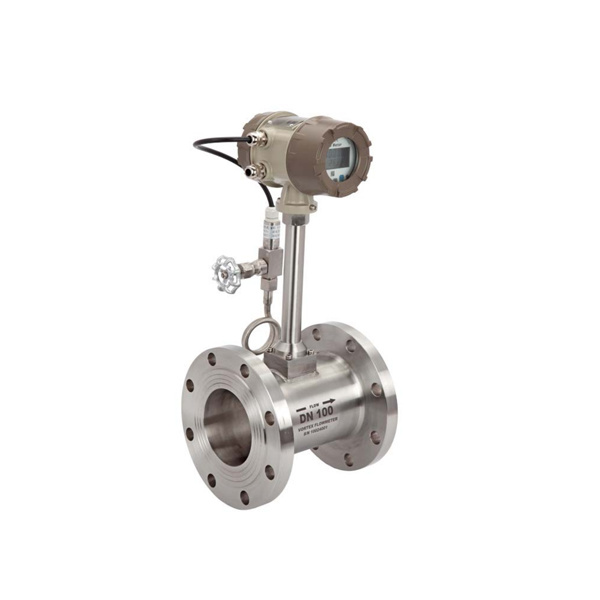
Understanding Vorex Flow Meters: A Comprehensive Guide to Flow Measurement
2026-09-03
Flow measurement is an essential aspect of various industries, from water treatment to chemical manufacturing and beyond. One device that stands out in this field is the Vorex flow meter. These instruments are designed to accurately gauge the flow rate of liquids and gases, ensuring that processes operate smoothly and efficiently.
A Vorex flow meter typically operates on the principle of measuring

How Acrylic Flow Meters Enhance Efficiency in Fluid Dynamics
2026-08-27
How Acrylic Flow Meters Enhance Efficiency in Fluid Dynamics
Table of Contents
1. Introduction to Acrylic Flow Meters
2. Understanding Fluid Dynamics
3. The Importance of Accurate Flow Measurement
4. Benefits of Acrylic Flow Meters
5. Applications of Acrylic Flow Meters in Various Industries
6. How Acrylic Flow Meters Work
7. Choosing the Right Acrylic Flow Meter
8

Understanding Durable Plastic Tube Type Flowmeters: A Comprehensive Guide
2026-08-20
Durable plastic tube type flowmeters are essential instruments in the measurement of fluid dynamics, prominently used in various industries including chemical processing, water treatment, and food production. These flowmeters are designed to provide accurate flow measurement while ensuring durability and reliability in diverse applications.
One of the primary advantages of durable plastic tube ty

CREATEC will be there where there is water
Focus on the independent research and development of online water quality analysis instruments and water environmental protection analysis instruments
ABOUT US
Hebei Create Instrumentation Technologies Co., Ltd. is a national high-tech technology enterprise which is specialized in the water quality online analysis instruments.The founder Hao shuanju was first awarded the national “Automatic Pure Water Monitor” patent in 1988.And entered into the field of water quality online analysis and research.
CONTACT US
Factory :NO.2 Building ,No.368 North Xinshi Road, Shijiazhuang 050091,Hebei Province,China.
Office Address: Block 23, Keying·Zhichuang Valley, Huai'an West Road, Luquan District, Shijiazhuang City
Tel: 86-311-83831058 / 67368592
E-Mail:meter@createc.cn
QUALITY OF SERVICE

Follow us
Learn more about online water quality analysis instruments