
Knowledge about disinfection of residual chlorine and chlorine dioxide
2023-06-20
After the wastewater is treated at the first or second level, the water quality improves and the bacterial content is greatly reduced, but its absolute value is still considerable, and there is a possibility of pathogenic bacteria.Therefore, the wastewater should be disinfected before being discharged into the water body.
After the wastewater is treated at the first or second level, the water quality improves and the bacterial content is greatly reduced, but its absolute value is still considerable, and there is a possibility of pathogenic bacteria.Therefore, the wastewater should be disinfected before being discharged into the water body.
Commonly used disinfectants are hypochlorous acids, chlorine dioxide, ozone, ultraviolet radiation, etc.Hypochlorous acid disinfectants come in the form of liquid chlorine, bleaching powder, bleaching powder essence, chlorine tablets, sodium hypochlorite, etc., mainly through HOCl to disinfect.Hypochlorous acid disinfection needs to detect residual chlorine of hypochlorous acid during the detection of parameters.The advantage of hypochlorous acid disinfectants is that they can continue to disinfect, and the weakness is that they are easy to generate chlorinated hydrocarbons from organic matter in the water, which have been confirmed to be extremely detrimental to human health. At the same time, the treated water will have some unpleasant odors.Hypochlorous acid disinfectant dust and chlorine gas released have a strong irritating effect on people's respiratory tract, eyes and skin. If it accidentally splashes into the eyes or touches the skin, rinse with plenty of water immediately.The storage environment should be cool, ventilated and dry, away from heat sources and fire, and should not be stored and transported with organic matter, acids and reducing agents. Rain and sunlight exposure should be prevented during transportation, and the movement should be light during loading and unloading to avoid collisions and rolling.
Chlorine is a yellow-green gas at atmospheric pressure, with a density of 3.2mg/mL at 0 degrees and one atmospheric pressure, which is about 2.5 times the weight of air, and it is strongly irritating.Generally, chlorine gas is prepared by electrolysis of an aqueous salt solution, and then the chlorine gas is pressurized and cooled to obtain liquid chlorine. Liquid chlorine is easily vaporized and has a boiling point of -34.5℃.The pressurized liquid chlorine becomes a yellow-green transparent liquid, and the volume of 1kg of liquid chlorine can become 300L after gasification.Chlorine is very active in nature, soluble in water, and its solubility decreases with the increase of water temperature.Chlorine is a highly irritating asphyxiating gas that can cause damage to the human respiratory system, eyes and skin. The allowable concentration in the air is 1mL/m3.Although it does not spontaneously ignite, it can aid combustion. When mixed with other flammable gases in sunlight, combustion and explosion will occur, and it can react with most substances.
Water quality
RELATED NEWS
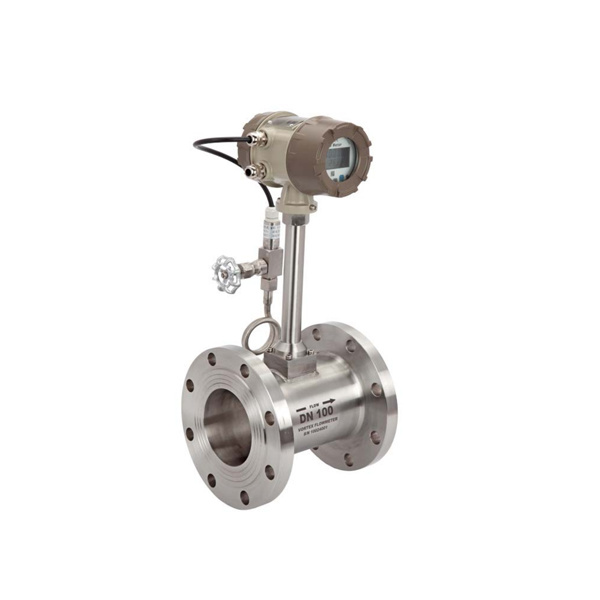
Understanding Vorex Flow Meters: A Comprehensive Guide to Flow Measurement
2026-09-03
Flow measurement is an essential aspect of various industries, from water treatment to chemical manufacturing and beyond. One device that stands out in this field is the Vorex flow meter. These instruments are designed to accurately gauge the flow rate of liquids and gases, ensuring that processes operate smoothly and efficiently.
A Vorex flow meter typically operates on the principle of measuring

How Acrylic Flow Meters Enhance Efficiency in Fluid Dynamics
2026-08-27
How Acrylic Flow Meters Enhance Efficiency in Fluid Dynamics
Table of Contents
1. Introduction to Acrylic Flow Meters
2. Understanding Fluid Dynamics
3. The Importance of Accurate Flow Measurement
4. Benefits of Acrylic Flow Meters
5. Applications of Acrylic Flow Meters in Various Industries
6. How Acrylic Flow Meters Work
7. Choosing the Right Acrylic Flow Meter
8

Understanding Durable Plastic Tube Type Flowmeters: A Comprehensive Guide
2026-08-20
Durable plastic tube type flowmeters are essential instruments in the measurement of fluid dynamics, prominently used in various industries including chemical processing, water treatment, and food production. These flowmeters are designed to provide accurate flow measurement while ensuring durability and reliability in diverse applications.
One of the primary advantages of durable plastic tube ty

CREATEC will be there where there is water
Focus on the independent research and development of online water quality analysis instruments and water environmental protection analysis instruments
ABOUT US
Hebei Create Instrumentation Technologies Co., Ltd. is a national high-tech technology enterprise which is specialized in the water quality online analysis instruments.The founder Hao shuanju was first awarded the national “Automatic Pure Water Monitor” patent in 1988.And entered into the field of water quality online analysis and research.
CONTACT US
Factory :NO.2 Building ,No.368 North Xinshi Road, Shijiazhuang 050091,Hebei Province,China.
Office Address: Block 23, Keying·Zhichuang Valley, Huai'an West Road, Luquan District, Shijiazhuang City
Tel: 86-311-83831058 / 67368592
E-Mail:meter@createc.cn
QUALITY OF SERVICE

Follow us
Learn more about online water quality analysis instruments