
Steel wastewater treatment
2023-06-20
Iron and steel enterprises are one of the largest water users. The iron and steel wastewater mainly contains SS, oil, saline, COD and other pollutants, which have the characteristics of high chromaticity, large changes in the concentration of major pollutants, unstable water quality, and more oil slick.
Iron and steel enterprises are one of the largest water users. The iron and steel wastewater mainly contains SS, oil, saline, COD and other pollutants, which have the characteristics of high chromaticity, large changes in the concentration of major pollutants, unstable water quality, and more oil slick.Today, we will use two cases to analyze the specific treatment methods of different steel wastewater.
1. The main source of steel wastewater
Steel wastewater mainly comes from production processes such as mineral processing, sintering, coking, ironmaking, and steel rolling.
1.) The main pollutant of the wastewater of the sintering plant is suspended solids. The precipitation-filtration treatment process is usually used, and the wastewater can be reused for production.
2) The wastewater of iron smelters can be divided into hot-rolled wastewater and cold-rolled wastewater.After the hot-rolled wastewater is treated with degreasing, precipitation, filtration, etc., the wastewater can be reused or discharged.The composition of cold-rolled wastewater is more complex. It often includes emulsion wastewater, chromium-containing wastewater, sodium thiocyanate wastewater, acid-base wastewater, etc. It needs to be pretreated (ultrafiltration, reduction, oxidation, neutralization) before coagulation and precipitation to achieve standard discharge or reuse.
3) Coke extinguishing wastewater and gas washing wastewater in the process of coking gas production in coking plants, especially gas washing wastewater, are the key points and difficulties in the treatment of steel wastewater.
Most coking plants currently use a secondary treatment process to treat gas washing wastewater, that is, biochemical treatment of low-concentration phenol-containing wastewater after phenol recovery.There are many methods for recovering phenols in wastewater, including steam dephenolization, adsorption dephenolization, extraction dephenolization, etc.Most of the large and medium-sized coking plants in our country use extraction methods to recover phenols from gas washing wastewater with high phenol concentrations.
The following describes two steel wastewater treatment.
1. Biochemical treatment of low-concentration phenol and cyanide wastewater
The low-concentration phenolic and cyanide wastewater generated by the gas generating station can be pretreated by processes such as regulation, cooling, and degreasing before entering the aerobic biochemical tank. Finally, the solid-liquid separation is carried out by the second sedimentation tank, in which the wastewater can be recycled or discharged, while the sludge part is returned to the biochemical tank, and the remaining sludge is concentrated and dehydrated.
After the gas washing wastewater is treated by physical, chemical and biochemical methods, phenols can be discharged to the standard, but water quality indicators such as COD and NH3-N are still difficult to meet the standard.
2. Treatment of low-concentration phenol and cyanide wastewater by A/O method
In order to make the effluent COD and NH3-N after biochemical treatment meet the emission standards, biological iron method, biochar method, hydrolysis and acidification pretreatment and other methods are often used to improve the efficiency of biochemical treatment.
Using the internal circulation A/O denitrification process, not only can COD meet the emission standards, but also the ammonia nitrogen content of the effluent can be less than 10mg/L.
Wastewater water quality: COD 1,544mg/L, phenol 187.7mg/L, NH3-N 319mg/L.
After treatment, the water quality of the effluent: COD 117mg/L, phenol 0.07mg/L, NH3-N 5.9mg/L.
Wastewater,Pollutant
RELATED NEWS
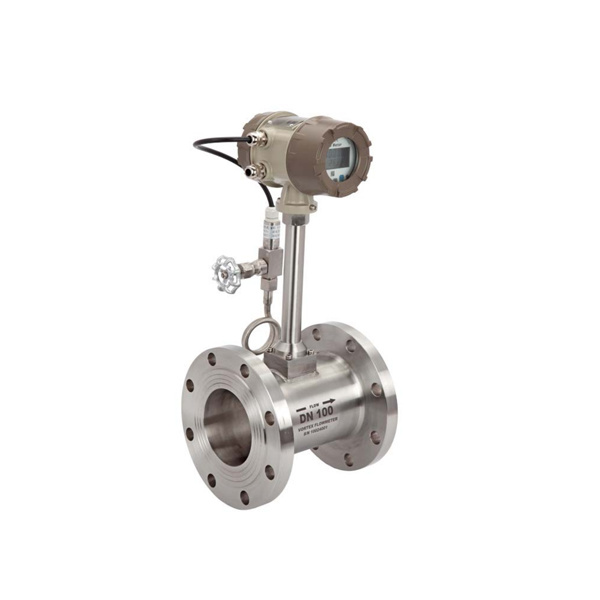
Understanding Vorex Flow Meters: A Comprehensive Guide to Flow Measurement
2026-09-03
Flow measurement is an essential aspect of various industries, from water treatment to chemical manufacturing and beyond. One device that stands out in this field is the Vorex flow meter. These instruments are designed to accurately gauge the flow rate of liquids and gases, ensuring that processes operate smoothly and efficiently.
A Vorex flow meter typically operates on the principle of measuring

How Acrylic Flow Meters Enhance Efficiency in Fluid Dynamics
2026-08-27
How Acrylic Flow Meters Enhance Efficiency in Fluid Dynamics
Table of Contents
1. Introduction to Acrylic Flow Meters
2. Understanding Fluid Dynamics
3. The Importance of Accurate Flow Measurement
4. Benefits of Acrylic Flow Meters
5. Applications of Acrylic Flow Meters in Various Industries
6. How Acrylic Flow Meters Work
7. Choosing the Right Acrylic Flow Meter
8

Understanding Durable Plastic Tube Type Flowmeters: A Comprehensive Guide
2026-08-20
Durable plastic tube type flowmeters are essential instruments in the measurement of fluid dynamics, prominently used in various industries including chemical processing, water treatment, and food production. These flowmeters are designed to provide accurate flow measurement while ensuring durability and reliability in diverse applications.
One of the primary advantages of durable plastic tube ty

CREATEC will be there where there is water
Focus on the independent research and development of online water quality analysis instruments and water environmental protection analysis instruments
ABOUT US
Hebei Create Instrumentation Technologies Co., Ltd. is a national high-tech technology enterprise which is specialized in the water quality online analysis instruments.The founder Hao shuanju was first awarded the national “Automatic Pure Water Monitor” patent in 1988.And entered into the field of water quality online analysis and research.
CONTACT US
Factory :NO.2 Building ,No.368 North Xinshi Road, Shijiazhuang 050091,Hebei Province,China.
Office Address: Block 23, Keying·Zhichuang Valley, Huai'an West Road, Luquan District, Shijiazhuang City
Tel: 86-311-83831058 / 67368592
E-Mail:meter@createc.cn
QUALITY OF SERVICE

Follow us
Learn more about online water quality analysis instruments