
Enhancing Water Quality Assessment: The Role of Electromagnetic Flow Meters in Improving Efficiency and Accuracy
2025-07-03
Enhancing Water Quality Assessment: The Role of Electromagnetic Flow Meters in Improving Efficiency and Accuracy
Table of Contents
1. Introduction to Water Quality Assessment
2. Importance of Accurate Water Quality Assessment
3. Understanding Electromagnetic Flow Meters
4. How Electromagnetic Flow Meters Work
5. Benefits of Using Electromagnetic Flow Meters for Water Quality A
Enhancing Water Quality Assessment: The Role of Electromagnetic Flow Meters in Improving Efficiency and Accuracy
Table of Contents
- 1. Introduction to Water Quality Assessment
- 2. Importance of Accurate Water Quality Assessment
- 3. Understanding Electromagnetic Flow Meters
- 4. How Electromagnetic Flow Meters Work
- 5. Benefits of Using Electromagnetic Flow Meters for Water Quality Assessment
- 6. Applications of Electromagnetic Flow Meters in Water Quality Monitoring
- 7. Best Practices for Implementing Electromagnetic Flow Meters
- 8. Future Trends in Water Quality Assessment Technology
- 9. Frequently Asked Questions
- 10. Conclusion
1. Introduction to Water Quality Assessment
In an era where water resources are under increasing pressure due to pollution, climate change, and population growth, **accurate water quality assessment** has become paramount. Water quality affects not only human health but also ecosystems and agriculture. To ensure the safety and sustainability of our water sources, technology and methodologies evolve rapidly. One such innovation is the **electromagnetic flow meter**, a device that significantly enhances the **efficiency** and **accuracy** of water quality assessments.
2. Importance of Accurate Water Quality Assessment
Water quality assessment involves a series of tests that determine the physical, chemical, and biological characteristics of water. The need for precision in these assessments cannot be overstated. Polluted water can lead to severe health issues, including gastrointestinal infections and neurological disorders. Reliable assessment methods are vital in various sectors, including:
- **Public Health**: Ensuring safe drinking water.
- **Environmental Protection**: Monitoring pollution levels in natural water bodies.
- **Agriculture**: Assessing water quality for irrigation purposes.
- **Industry**: Maintaining quality standards in processes that rely on water.
With the right tools, professionals can detect contaminants early, preventing larger environmental and health crises.
3. Understanding Electromagnetic Flow Meters
**Electromagnetic flow meters (EMF)** are devices that measure the flow rate of conductive liquids. They operate on Faraday's law of electromagnetic induction, which states that a voltage is induced when a conductor moves through a magnetic field. This application of physics allows for precise measurements of flow rates, making EMF a preferred choice in water quality assessment.
These flow meters are beneficial for assessing various water types, including:
- **Potable Water**: Ensuring safe drinking water supply.
- **Wastewater**: Monitoring effluent discharge and treatment processes.
- **Agricultural Water**: Evaluating irrigation water quality.
Their adaptability to different conditions makes them invaluable in diverse applications.
4. How Electromagnetic Flow Meters Work
Understanding how electromagnetic flow meters function is essential for recognizing their advantages. The core components of an EMF include:
- **Electrodes**: Installed in the flow meter, these measure the induced voltage.
- **Magnetic Field**: Generated by coils surrounding the flow tube, this field is crucial for operation.
- **Flow Tube**: The conductive liquid flows through this tube, where measurements occur.
When water flows through the magnetic field, the electrodes detect the voltage generated. This voltage correlates directly to the flow rate, allowing for real-time measurement and data collection.
Key features that enhance their functionality include:
- **Non-Intrusive Measurement**: Since EMFs measure flow without obstructing it, they reduce the risk of contamination.
- **Wide Range of Fluids**: They can measure various conductive liquids, not just water.
- **Minimal Maintenance**: With no moving parts, electromagnetic flow meters require less frequent maintenance compared to mechanical meters.
5. Benefits of Using Electromagnetic Flow Meters for Water Quality Assessment
Utilizing electromagnetic flow meters for water quality assessment offers numerous advantages:
5.1 High Accuracy and Reliability
The precision of EMF ensures that water quality data is consistent and reliable. This accuracy is critical for regulatory compliance and environmental monitoring.
5.2 Reduced Operational Costs
While the initial investment may be higher than traditional flow meters, the longevity and low maintenance costs of EMF lead to significant savings over time.
5.3 Versatility in Applications
EMF technology is applicable across various sectors, from municipal water supply to industrial wastewater treatment, enhancing their utility.
5.4 Real-Time Data Monitoring
The capacity for real-time data collection and monitoring allows for immediate responses to any variations in water quality, enhancing decision-making processes.
6. Applications of Electromagnetic Flow Meters in Water Quality Monitoring
Electromagnetic flow meters are widely used in numerous applications, each benefiting from the device's unique capabilities:
6.1 Municipal Water Supply
Cities employ EMF to monitor drinking water quality, ensuring compliance with health regulations and maintaining public safety.
6.2 Wastewater Treatment
In wastewater facilities, EMF tracks flow rates and quality, facilitating effective treatment processes and efficient resource management.
6.3 Industrial Processes
Many industries use EMF for monitoring water quality in production processes, ensuring that the water used meets specific quality standards.
6.4 Agricultural Water Management
Farmers utilize EMF to assess irrigation water quality, optimizing crop yield and reducing water waste.
7. Best Practices for Implementing Electromagnetic Flow Meters
To maximize the benefits of electromagnetic flow meters, follow these best practices:
7.1 Proper Installation
Ensure that the flow meter is installed according to manufacturer guidelines. Location, orientation, and pipe size can significantly impact measurement accuracy.
7.2 Regular Calibration
Routine calibration of the flow meter is essential to maintain accuracy over time. Follow a strict calibration schedule based on usage patterns and environmental changes.
7.3 Data Integration
Integrate electromagnetic flow meters with data management systems for improved monitoring and analysis. This integration allows for better decision-making based on comprehensive data.
7.4 Training Personnel
Invest in training for personnel operating the flow meters to ensure they understand the technology and can respond effectively to any issues.
8. Future Trends in Water Quality Assessment Technology
The future of water quality assessment is bright, with continuous advancements in technology. Electromagnetic flow meters are at the forefront, and we foresee several trends shaping their evolution:
8.1 Integration with IoT
The Internet of Things (IoT) allows for connected devices that enable real-time monitoring and data sharing, enhancing decision-making processes in water management.
8.2 Enhanced Data Analytics
As data analytics capabilities improve, the insights derived from flow meters will become more valuable, driving operational efficiencies and predictive maintenance.
8.3 Sustainability Focus
With increasing emphasis on sustainability, technologies that promote efficient resource use will gain prominence, positioning EMF as critical tools in conservation efforts.
9. Frequently Asked Questions
9.1 What is an electromagnetic flow meter?
An electromagnetic flow meter is a device that measures the flow rate of conductive liquids using the principles of electromagnetic induction.
9.2 How accurate are electromagnetic flow meters?
Electromagnetic flow meters are highly accurate, often achieving an accuracy of ±0.5% of the reading, making them a reliable choice for water quality assessment.
9.3 Can electromagnetic flow meters measure non-conductive liquids?
No, electromagnetic flow meters are designed to measure conductive liquids. Non-conductive liquids require different measurement technologies.
9.4 What maintenance do electromagnetic flow meters require?
EMF requires minimal maintenance due to their lack of moving parts. Regular calibration and checks for electrode cleanliness are recommended.
9.5 Where can electromagnetic flow meters be used?
They can be used in various applications, including municipal water supply, wastewater treatment, and industrial processes.
10. Conclusion
Electromagnetic flow meters are transforming the landscape of water quality assessment, offering unmatched **efficiency** and **accuracy**. Their ability to provide real-time data, coupled with low maintenance requirements, makes them indispensable in a world increasingly concerned about water quality. As we move forward, the integration of advanced technologies and the ongoing evolution of electromagnetic flow meters will further enhance our capability to monitor and protect our precious water resources. Investing in this technology is not just a step toward better water management; it is a commitment to a healthier and more sustainable future.
Insert Electromagnetic Flow Meter
RELATED NEWS
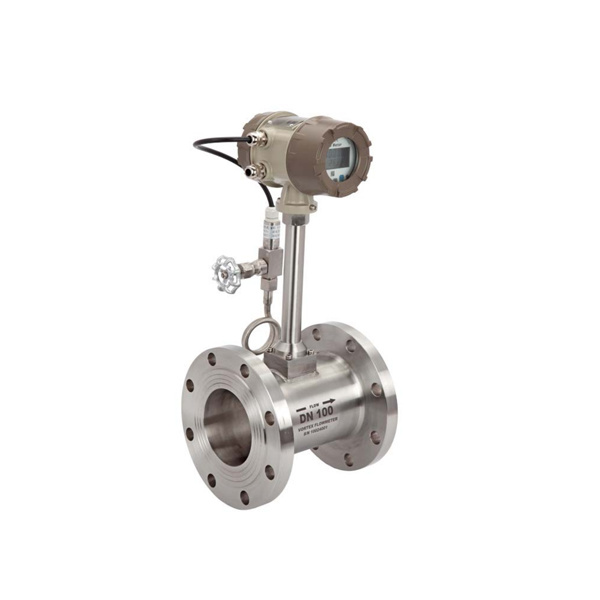
Understanding Vorex Flow Meters: A Comprehensive Guide to Flow Measurement
2026-09-03
Flow measurement is an essential aspect of various industries, from water treatment to chemical manufacturing and beyond. One device that stands out in this field is the Vorex flow meter. These instruments are designed to accurately gauge the flow rate of liquids and gases, ensuring that processes operate smoothly and efficiently.
A Vorex flow meter typically operates on the principle of measuring

How Acrylic Flow Meters Enhance Efficiency in Fluid Dynamics
2026-08-27
How Acrylic Flow Meters Enhance Efficiency in Fluid Dynamics
Table of Contents
1. Introduction to Acrylic Flow Meters
2. Understanding Fluid Dynamics
3. The Importance of Accurate Flow Measurement
4. Benefits of Acrylic Flow Meters
5. Applications of Acrylic Flow Meters in Various Industries
6. How Acrylic Flow Meters Work
7. Choosing the Right Acrylic Flow Meter
8

Understanding Durable Plastic Tube Type Flowmeters: A Comprehensive Guide
2026-08-20
Durable plastic tube type flowmeters are essential instruments in the measurement of fluid dynamics, prominently used in various industries including chemical processing, water treatment, and food production. These flowmeters are designed to provide accurate flow measurement while ensuring durability and reliability in diverse applications.
One of the primary advantages of durable plastic tube ty

CREATEC will be there where there is water
Focus on the independent research and development of online water quality analysis instruments and water environmental protection analysis instruments
ABOUT US
Hebei Create Instrumentation Technologies Co., Ltd. is a national high-tech technology enterprise which is specialized in the water quality online analysis instruments.The founder Hao shuanju was first awarded the national “Automatic Pure Water Monitor” patent in 1988.And entered into the field of water quality online analysis and research.
CONTACT US
Factory :NO.2 Building ,No.368 North Xinshi Road, Shijiazhuang 050091,Hebei Province,China.
Office Address: Block 23, Keying·Zhichuang Valley, Huai'an West Road, Luquan District, Shijiazhuang City
Tel: 86-311-83831058 / 67368592
E-Mail:meter@createc.cn
QUALITY OF SERVICE

Follow us
Learn more about online water quality analysis instruments