
Empowering Water Quality Professionals with Advanced Electromagnetic Flow Meter Technology
2024-10-11
Empowering Water Quality Professionals with Advanced Electromagnetic Flow Meter Technology
Table of Contents
1. Introduction to Electromagnetic Flow Meters
2. The Importance of Accurate Water Quality Measurement
3. How Electromagnetic Flow Meters Work
3.1 Basic Principles of Operation
3.2 Features and Components
4. Key Advantages of Using Electromagnetic Flow Meters
4.1 High Accuracy and Reliabili
Empowering Water Quality Professionals with Advanced Electromagnetic Flow Meter Technology
Table of Contents
1. Introduction to Electromagnetic Flow Meters
2. The Importance of Accurate Water Quality Measurement
3. How Electromagnetic Flow Meters Work
3.1 Basic Principles of Operation
3.2 Features and Components
4. Key Advantages of Using Electromagnetic Flow Meters
4.1 High Accuracy and Reliability
4.2 Versatility in Application
4.3 Low Maintenance Requirements
5. Applications in Water Quality Analysis
5.1 Industrial Water Management
5.2 Environmental Monitoring
5.3 Municipal Water Supply
6. Challenges in Water Quality Measurement
7. Future Trends in Electromagnetic Flow Meter Technology
8. Conclusion
9. FAQs
1. Introduction to Electromagnetic Flow Meters
In the ever-evolving world of **water quality management**, professionals face the challenge of obtaining precise measurements that can guide decision-making processes. **Electromagnetic flow meters** have emerged as powerful tools in this field, providing accurate and reliable data crucial for effective water analysis. This article delves into the transformative impact of electromagnetic flow meters on the water quality sector.
2. The Importance of Accurate Water Quality Measurement
Water quality professionals are tasked with monitoring various parameters, including **flow rate**, **temperature**, **pH**, and **conductivity**. Accurate measurements are essential not only for regulatory compliance but also for safeguarding public health and the environment. With increased scrutiny on water quality from both regulatory agencies and the public, the demand for advanced measurement technologies has never been greater.
3. How Electromagnetic Flow Meters Work
Understanding the operational principles of electromagnetic flow meters is critical for water quality professionals. These devices utilize electromagnetic fields to determine the flow rate of electrically conductive fluids, making them particularly effective in water analysis.
3.1 Basic Principles of Operation
The fundamental principle behind electromagnetic flow meters is **Faraday's Law of Electromagnetic Induction**. When a conductive liquid flows through a magnetic field, it generates a voltage proportional to the flow velocity. Sensors detect this voltage, allowing for accurate flow measurement.
3.2 Features and Components
Electromagnetic flow meters consist of several key components:
- **Magnetic Field Generator**: Produces a magnetic field that interacts with the conductive fluid.
- **Electrodes**: Measure the induced voltage created by the flowing liquid.
- **Flow Tube**: Houses the liquid and is often made of non-magnetic materials to prevent interference.
- **Transmitter**: Converts the voltage signal into a readable flow rate.
4. Key Advantages of Using Electromagnetic Flow Meters
The transition to electromagnetic flow meters offers numerous benefits for water quality professionals.
4.1 High Accuracy and Reliability
Electromagnetic flow meters provide a high level of accuracy, often within ±0.5% of the reading. Their reliability stems from the absence of moving parts, which reduces wear and tear, thus minimizing maintenance needs.
4.2 Versatility in Application
These meters can measure various types of fluids, including **wastewater**, **drinking water**, and **industrial process water**. Their flexibility allows water quality professionals to utilize them across multiple sectors.
4.3 Low Maintenance Requirements
With no moving parts, electromagnetic flow meters are inherently low-maintenance. This feature translates to less downtime and lower operational costs, making them an attractive option for professionals managing tight budgets.
5. Applications in Water Quality Analysis
Electromagnetic flow meters have found applications across various industries, enhancing water quality measurement processes.
5.1 Industrial Water Management
In industrial settings, these meters play a crucial role in monitoring water consumption and discharge, ensuring compliance with environmental regulations. Industries can optimize their water usage, leading to significant cost savings.
5.2 Environmental Monitoring
Electromagnetic flow meters are invaluable in environmental monitoring, helping organizations track water quality in rivers, lakes, and other natural bodies. By providing accurate flow data, these instruments assist in assessing the health of aquatic ecosystems.
5.3 Municipal Water Supply
Municipalities rely on electromagnetic flow meters for managing water supply systems. These devices enable real-time monitoring of flow rates, helping to detect leaks and prevent water loss, ultimately enhancing service delivery to communities.
6. Challenges in Water Quality Measurement
Despite the advantages of electromagnetic flow meters, challenges remain. Environmental factors, such as temperature fluctuations and changes in water composition, can affect measurement accuracy. Additionally, the initial investment costs can be a barrier for some organizations.
7. Future Trends in Electromagnetic Flow Meter Technology
As technology advances, electromagnetic flow meters are evolving. Key trends include the integration of **IoT (Internet of Things)** capabilities, allowing for remote monitoring and data analysis. Improved algorithms for data analysis are also enhancing the predictive capabilities of these instruments, offering richer insights for water quality professionals.
8. Conclusion
Electromagnetic flow meter technology is empowering water quality professionals to achieve higher levels of accuracy, reliability, and efficiency. As the demand for precise water quality measurement continues to grow, these advanced instruments will play a pivotal role in ensuring the sustainability of our water resources. Embracing this technology not only enhances operational effectiveness but also contributes to the broader goal of protecting public health and the environment.
9. FAQs
Q1: What types of fluids can electromagnetic flow meters measure?
A1: Electromagnetic flow meters can measure any electrically conductive fluid, including water, slurries, and some chemicals.
Q2: How do electromagnetic flow meters differ from mechanical flow meters?
A2: Unlike mechanical flow meters, which have moving parts, electromagnetic flow meters operate without any moving components, making them more durable and requiring less maintenance.
Q3: Are electromagnetic flow meters suitable for wastewater applications?
A3: Yes, electromagnetic flow meters are widely used in wastewater applications due to their ability to accurately measure flow rates in challenging conditions.
Q4: What are the typical installation requirements for electromagnetic flow meters?
A4: Installation typically requires a straight run of pipe before and after the flow meter to ensure accurate readings, as well as electrical connections for the magnetic field generator.
Q5: How can I ensure the accuracy of my electromagnetic flow meter?
A5: Regular calibration and maintenance, along with monitoring the condition of the flow tube and electrodes, are essential for maintaining accuracy.
Insert Electromagnetic Flow Meter
RELATED NEWS
Understanding Vorex Flow Meters: A Comprehensive Guide to Flow Measurement
2026-09-03
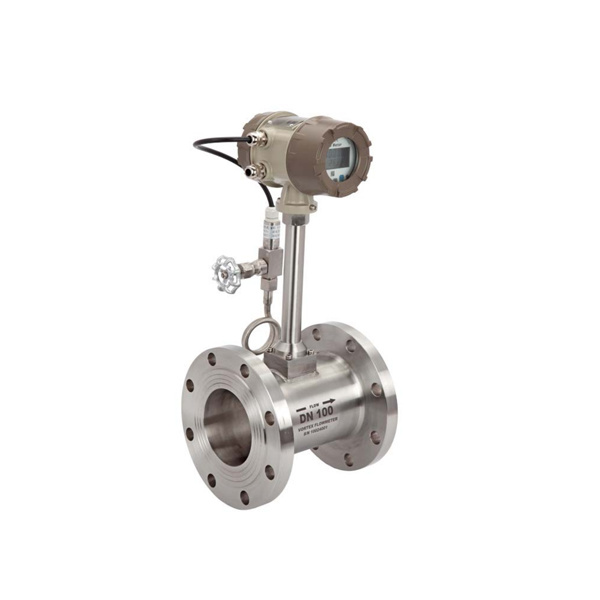
Flow measurement is an essential aspect of various industries, from water treatment to chemical manufacturing and beyond. One device that stands out in this field is the Vorex flow meter. These instruments are designed to accurately gauge the flow rate of liquids and gases, ensuring that processes operate smoothly and efficiently.
A Vorex flow meter typically operates on the principle of measuring

How Acrylic Flow Meters Enhance Efficiency in Fluid Dynamics
2026-08-27
How Acrylic Flow Meters Enhance Efficiency in Fluid Dynamics
Table of Contents
1. Introduction to Acrylic Flow Meters
2. Understanding Fluid Dynamics
3. The Importance of Accurate Flow Measurement
4. Benefits of Acrylic Flow Meters
5. Applications of Acrylic Flow Meters in Various Industries
6. How Acrylic Flow Meters Work
7. Choosing the Right Acrylic Flow Meter
8

Understanding Durable Plastic Tube Type Flowmeters: A Comprehensive Guide
2026-08-20
Durable plastic tube type flowmeters are essential instruments in the measurement of fluid dynamics, prominently used in various industries including chemical processing, water treatment, and food production. These flowmeters are designed to provide accurate flow measurement while ensuring durability and reliability in diverse applications.
One of the primary advantages of durable plastic tube ty

CREATEC will be there where there is water
Focus on the independent research and development of online water quality analysis instruments and water environmental protection analysis instruments
ABOUT US
Hebei Create Instrumentation Technologies Co., Ltd. is a national high-tech technology enterprise which is specialized in the water quality online analysis instruments.The founder Hao shuanju was first awarded the national “Automatic Pure Water Monitor” patent in 1988.And entered into the field of water quality online analysis and research.
CONTACT US
Factory :NO.2 Building ,No.368 North Xinshi Road, Shijiazhuang 050091,Hebei Province,China.
Office Address: Block 23, Keying·Zhichuang Valley, Huai'an West Road, Luquan District, Shijiazhuang City
Tel: 86-311-83831058 / 67368592
E-Mail:meter@createc.cn
QUALITY OF SERVICE

Follow us
Learn more about online water quality analysis instruments