
Revolutionizing Water Quality Control: The Power of Digital Multi-parameter Integration Sensors
2024-05-16
**Introduction**
In today's fast-paced world, ensuring water quality is more crucial than ever. With increasing pollution and environmental challenges, it is essential to have advanced technology to monitor and control water quality effectively. One such innovation that is revolutionizing water quality control is digital multi-parameter integration sensors. These sensors offer a comprehensive solu
**Introduction**
In today's fast-paced world, ensuring water quality is more crucial than ever. With increasing pollution and environmental challenges, it is essential to have advanced technology to monitor and control water quality effectively. One such innovation that is revolutionizing water quality control is digital multi-parameter integration sensors. These sensors offer a comprehensive solution for monitoring various parameters of water quality in real-time, providing accurate and reliable data for analysis and decision-making.
**The Importance of Water Quality Control**
Water is a vital resource that sustains life on Earth. The quality of water directly impacts human health, the environment, and various industries such as agriculture, manufacturing, and healthcare. Contaminated water can lead to serious health issues, environmental degradation, and economic losses. Therefore, it is crucial to monitor and control water quality to ensure the safety and sustainability of our water resources.
**Understanding Digital Multi-parameter Integration Sensors**
Digital multi-parameter integration sensors are advanced devices that can measure multiple parameters of water quality simultaneously. These sensors are equipped with various probes and sensors that can detect parameters such as pH, temperature, conductivity, turbidity, dissolved oxygen, and more. By collecting data on multiple parameters in real-time, these sensors provide a comprehensive view of water quality and enable accurate analysis and monitoring.
**Benefits of Digital Multi-parameter Integration Sensors**
- Accurate and Reliable Data: Digital multi-parameter integration sensors provide accurate and reliable data on various parameters of water quality, enabling precise monitoring and analysis.
- Real-time Monitoring: These sensors offer real-time monitoring of water quality, allowing for immediate detection of any changes or anomalies.
- Cost-effective Solution: Digital multi-parameter integration sensors are a cost-effective solution for water quality control, as they eliminate the need for multiple individual sensors and reduce maintenance costs.
- User-friendly Interface: These sensors come with user-friendly interfaces that make them easy to operate and interpret data, even for non-experts.
**Applications of Digital Multi-parameter Integration Sensors**
Digital multi-parameter integration sensors have a wide range of applications in various industries and settings, including:
- Water Treatment Plants: Monitoring water quality in treatment plants to ensure safe and clean drinking water.
- Aquaculture: Monitoring water quality in fish farms to optimize conditions for fish growth and health.
- Environmental Monitoring: Tracking water quality in rivers, lakes, and oceans to assess environmental impact and pollution levels.
- Industrial Processes: Monitoring water quality in industrial processes to ensure compliance with regulations and standards.
**FAQs**
1. How do digital multi-parameter integration sensors work?
Digital multi-parameter integration sensors work by using advanced probes and sensors to measure various parameters of water quality simultaneously. The data collected is then transmitted to a central monitoring system for analysis.
2. Are digital multi-parameter integration sensors easy to install and operate?
Yes, digital multi-parameter integration sensors are designed to be easy to install and operate, with user-friendly interfaces that make them accessible to a wide range of users.
3. What are the key advantages of using digital multi-parameter integration sensors?
The key advantages of using digital multi-parameter integration sensors include accurate data collection, real-time monitoring, cost-effectiveness, and user-friendly interfaces.
4. Can digital multi-parameter integration sensors be used in different water environments?
Yes, digital multi-parameter integration sensors are versatile and can be used in various water environments, including freshwater, saltwater, and wastewater.
5. How can digital multi-parameter integration sensors benefit my organization or industry?
Digital multi-parameter integration sensors can benefit your organization or industry by providing accurate data for monitoring water quality, ensuring compliance with regulations, and optimizing processes for better efficiency and safety.
**Conclusion**
Digital multi-parameter integration sensors are revolutionizing water quality control with their advanced technology and comprehensive solutions. By utilizing these innovative sensors, organizations and industries can ensure safe and clean water for all, while optimizing processes and reducing costs. Embrace the power of digital multi-parameter integration sensors and take your water quality control to the next level.
Digital Multi-parameter integration sensor
RELATED NEWS

Understanding the Importance of Single Stage RO Controllers in Water Quality Analysis
2026-10-15
In the medical and health sector, the quality of water used in analysis and laboratory processes is paramount. Single Stage RO (Reverse Osmosis) Controllers play a crucial role in maintaining this quality by ensuring that water purification systems operate efficiently and effectively. These controllers are designed to manage the reverse osmosis process, which is essential for producing high-qualit
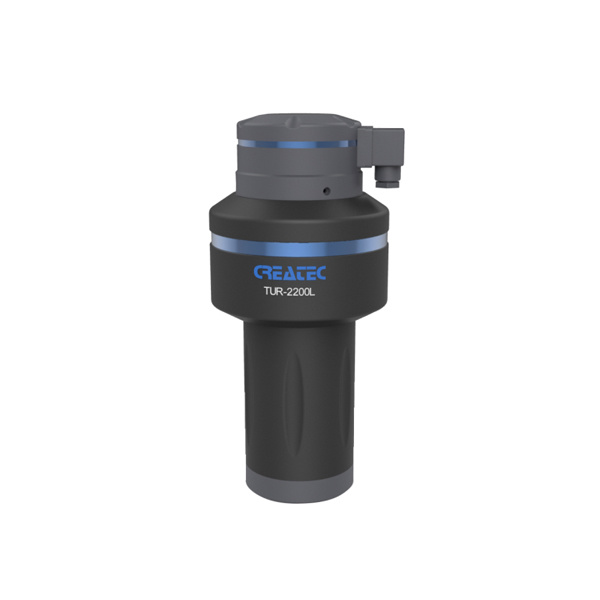
The Future of Water Treatment: Harnessing the Power of Online Turbidity Sensors
2026-10-08
The Future of Water Treatment: Harnessing the Power of Online Turbidity Sensors
Table of Contents
Introduction: The Importance of Water Quality Monitoring
Understanding Turbidity: What It Is and Why It Matters
The Role of Online Turbidity Sensors in Modern Water Treatment
Technology Behind Online Turbidity Sensors: How They Work
Benefits of Using Online Turbidity Sensors in Water Treatment
Applic

Understanding High Turbidity Data Acquisition Terminals in Water Quality Analysis
2026-10-01
---
In the realm of water quality analysis, particularly in the pharmaceutical and healthcare industries, High Turbidity Data Acquisition Terminals are essential tools. These specialized devices are designed to measure and record turbidity levels in water samples, which is a crucial parameter in determining the clarity and quality of water. Turbidity, caused by suspended particles, microorganisms,

CREATEC will be there where there is water
Focus on the independent research and development of online water quality analysis instruments and water environmental protection analysis instruments
ABOUT US
Hebei Create Instrumentation Technologies Co., Ltd. is a national high-tech technology enterprise which is specialized in the water quality online analysis instruments.The founder Hao shuanju was first awarded the national “Automatic Pure Water Monitor” patent in 1988.And entered into the field of water quality online analysis and research.
CONTACT US
Factory :NO.2 Building ,No.368 North Xinshi Road, Shijiazhuang 050091,Hebei Province,China.
Office Address: Block 23, Keying·Zhichuang Valley, Huai'an West Road, Luquan District, Shijiazhuang City
Tel: 86-311-83831058 / 67368592
E-Mail:meter@createc.cn
QUALITY OF SERVICE

Follow us
Learn more about online water quality analysis instruments